

Michigan School of Botanical Medicine: Clinical Herbalism Rooted in Community Care
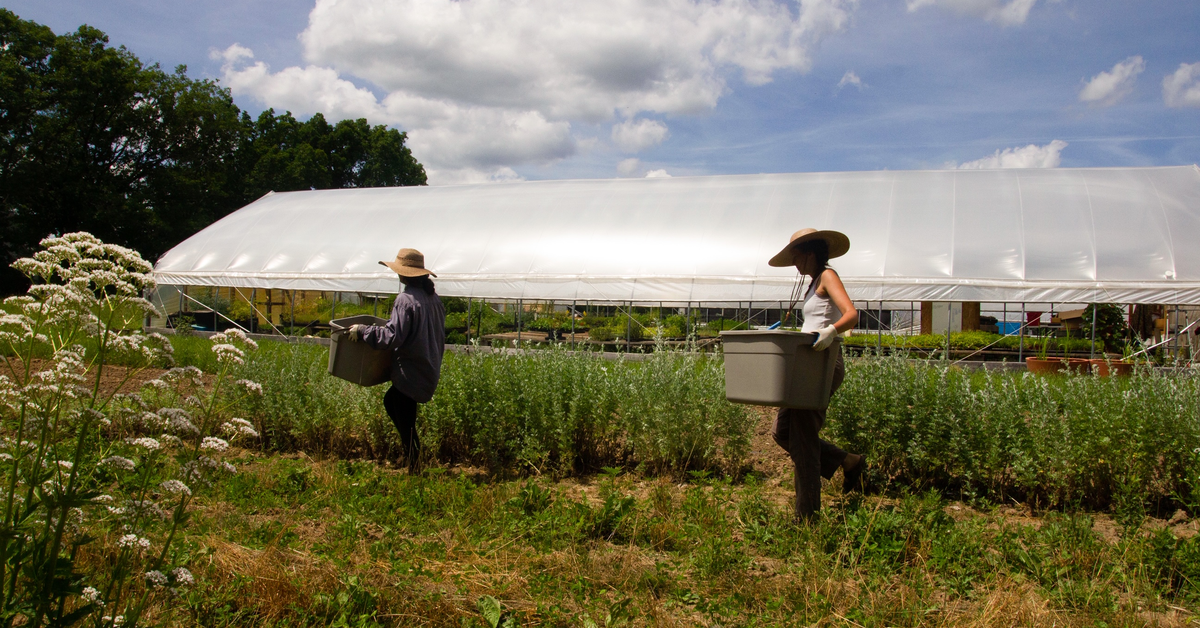
Two people carry plastic tubs along a planted field beside a large greenhouse. Photograph supplied by Michigan School of Botanical Medicine.

A group stands along a planted field row while one person crouches beside the plants. Photograph supplied by Michigan School of Botanical Medicine.
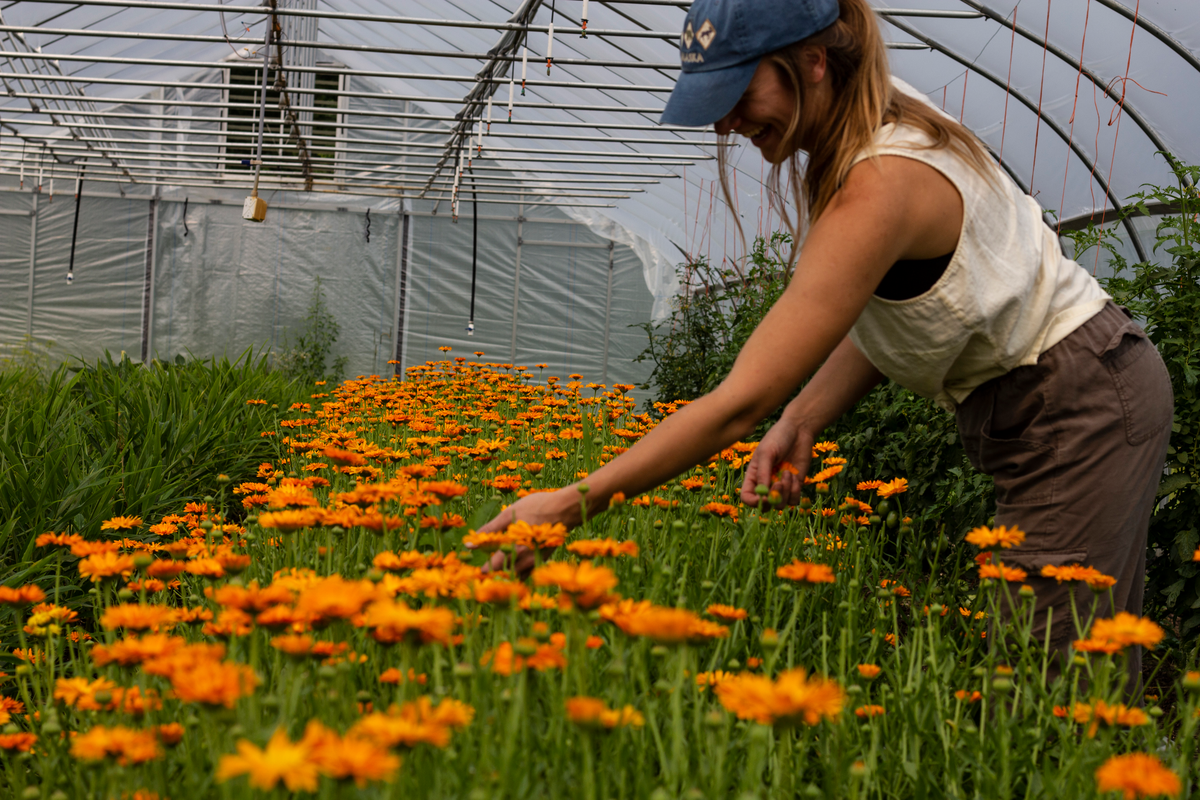
A person reaches into a bed of orange-flowering plants in a greenhouse. Photo credit: Zyriah Schlitter 2016. Photograph supplied by Michigan School of Botanical Medicine.

A woven basket held beside low flowering plants in a garden bed while another person reaches down nearby. Photograph supplied by Michigan School of Botanical Medicine.
In Dexter and Ypsilanti, Michigan, the school connects hands-on learning and clinical reasoning with a decade of community care.
DEXTER, MI, UNITED STATES, October 26, 2026 /EINPresswire.com/ -- The Michigan School of Botanical Medicine, the herbal school of Bloodroot Herb Shop in Ypsilanti, Michigan, sets out how its teaching grows from community care. Its classroom on private land in Dexter, near Ann Arbor, and Bloodroot's Ypsilanti space bring together plant study, clinical reasoning and shared learning, led by clinical and community herbalist and full-spectrum doula Alex Crofoot and guest teachers.
The school connects plant identification, ethical harvest, medicine making, anatomy, materia medica and case-based clinical skills with more than ten years of free clinics, reproductive healthcare, birth and abortion support, mutual aid and street-level care across southeast Michigan. Materia medica is the organized study of individual herbs.
Community Care as the Foundation of Teaching
The Michigan School of Botanical Medicine describes a community-rooted, mutual aid framework for herbal education, a literal description of how it is funded. Bloodroot became a nonprofit in 2026 and operates as a community-supported apothecary: every product sold supports its donation-based herbal clinic, sliding-scale consultations, community food pantry, free and sliding-scale classes, and mutual aid. Revenue connects directly to care, without institutional funding between them.
The school describes its approach as evidence-based and herbalism as a parallel care infrastructure that can work alongside pharmaceuticals, physicians and therapists to expand access and autonomy, rather than as “alternative medicine.” Its vision is for wound care, nervous-system support and birth-support skills to be held in common across southeast Michigan, rather than restricted by credentials or ability to pay.
The school teaches herbalism as a global human inheritance rather than a single white Western tradition, encouraging students to explore those relationships, including their own ancestral plant traditions. In this view, every culture, region and person descends from people who relied on plants for food, medicine, ceremony and survival, often only a few generations ago.
The Michigan School of Botanical Medicine links this inclusive view to accountability. Its anti-racist framework credits Indigenous peoples, enslaved Africans, midwives and traditional healers with shaping and preserving much of Western herbal knowledge. The school teaches that their knowledge has too often been erased, taken and sold for profit. It teaches from within that history, naming knowledge's origins and the harm done in taking it. This framework shapes how plants and traditions are credited, how medicine is sourced and wildcrafted, and why care must reach the communities whose knowledge built the field. The upcoming online course Plants Against the Patriarchy extends it into clinical care for reproductive health.
Complementary In-Person Programs
At the Michigan School of Botanical Medicine, Gather & Garble develops hands-on preparation skills, while Herbal Foundations develops body-system knowledge, assessment and case-based clinical reasoning. The programs welcome beginners and approach learning through different tasks.
The school describes Gather & Garble as a fun, hands-on introduction to making herbal medicine over six seasonal weekends on the Dexter land. Students identify and harvest plants from their local ecosystem, prepare teas, tinctures, oils, salves, vinegars and honeys, and distill fresh plants into aromatic hydrosols. They leave with a medicine chest they made from plants they can name. Home herbalists, bodyworkers, birth workers, caregivers and clinicians are welcome; prior herbal training is not required.
Identification and ethical harvest come first, opening with herbal safety, regional plant knowledge and time on the land. Students distinguish native, naturalized, invasive and cultivated plants; ethical wildcrafting is taught as its own subject. Plant energetics, the traditional vocabulary of hot/cold, moist/dry and tense/lax, is introduced alongside identification. Plans follow the season: a late frost or thin crop can change that weekend's harvest.
In the Michigan School of Botanical Medicine's Gather & Garble curriculum, water medicine includes hot and cold infusions, while alcohol extraction includes fresh and dried tinctures. Each preparation teaches a different set of choices. Water work also covers decoctions of roots, bark and seeds, hydrotherapy and a hydrosol distillation workshop. Oil and salve work compares carrier oils, fresh and dried material, solar and heat infusion, and prevention of spoilage and mold. Alcohol work includes pressing, straining, folk methods compared with measured plant-to-liquid ratios, and an introduction to formulation. Vinegar and honey work includes herbal honeys and oxymels. Safety throughout includes labeling, storage, herb-drug interactions and lactation considerations. Review, troubleshooting and seasonal preservation close the course; students take home recipes, handouts and their preparations.
Herbal Foundations is the school's core clinical curriculum: six weekends, May through October, in a heated and cooled Dexter schoolroom. It opens with clinical foundations: intake forms, assessment, formulation, scope of practice, ethics and safety. Students learn the limits of an herbalist's role before formulating. Study of each system—lymphatic and immune, respiratory, digestive, nervous and reproductive—pairs anatomy and physiology, traditional energetic perspectives, materia medica and case studies. Students learn to assess constitution alongside symptoms, as Crofoot does clinically. Reproductive health is taught by an instructor whose clinical and doula practice centers on it.
Herbal Foundations includes two field trips and two student presentations. The final presentation is each student's capstone, an independent study chosen with instructor approval and presented to the class. Examples include a plant monograph, body-system investigation, formulation project, or wildcrafting or growing study. Gather & Garble develops practical skill with plant material; Foundations develops reasoning about applying it to a real person's health, safely and within scope.
Reproductive Herbalism, History and Access
Plants Against the Patriarchy is the Michigan School of Botanical Medicine's recorded, self-paced online series, bringing a more radical framework to clinical reproductive herbalism so anyone, anywhere, can learn. It pairs herbal pharmacology and clinical practice with the history of who controlled access to plant knowledge and how plants have been used for control, resistance and survival.
The series has six modules. Sovereign Cycle explores menstrual-health plant history and pharmacology, PMS, PMDD and who defined a “normal” cycle. Autonomous Release examines pregnancy-release plant history, the midwives and herbalists who held that knowledge, and supportive herbal care alongside modern medical options, with clear red flags; it draws on the three-hour training Crofoot teaches in person. The Poison Path explores toxicology and herbalism as two sides of the same knowledge and the history of women condemned for holding it. Sovereign Sexuality examines herbs for pleasure, desire and sexual health and the politics of whose bodies have been controlled. Untangling the Pelvic Floor covers anatomy, physiology and herbal approaches to pelvic floor dysfunction, pain and prolapse, with attention to trauma and consent. Chronic Cycles addresses the vaginal microbiome, biofilms and herbal approaches to recurrent bacterial vaginosis, yeast and UTIs.
Bonus classes in development cover fertility awareness, pregnancy, postpartum, PMOS, formerly called PCOS, endometriosis, perimenopause and herbal support after sexual assault. Hosted on LearnWorlds, the series requires no prior herbal training and is designed for herbalists, doulas, midwives, birth workers, community health workers, harm reductionists, mutual aid organizers and others interested in bodily autonomy. Like all of the school's teaching, it is educational and does not replace medical care.
The Practitioner Experience Behind the School
Crofoot, herbal educator and founder of Bloodroot Herb Shop, brings decade-plus practice in clinical herbalism, reproductive care, harm reduction, mutual aid and community-based medicine to the Michigan School of Botanical Medicine. Her evidence-informed, trauma-aware approach works alongside modern healthcare, not in place of it.
Alex Crofoot, instructor at the Michigan School of Botanical Medicine, writes: “I approach herbal care through both a clinical, evidence-informed lens and a traditional, bioregional lens, with harm reduction, trauma-informed care, and individual autonomy at the center of my practice.”
Crofoot considers the whole person, not only the symptom, through intake, health history, constitution and energetics: hot/cold, damp/dry or tense/lax. She selects herbs whose own qualities fit, combining this traditional lens with evidence-informed training in anatomy, pharmacology and herb-drug interactions. People with the same complaint may need very different herbs; constitutional assessment is how she tells the difference.
Her ancestral Germanic, Slavic, Eastern European and Appalachian plant traditions sit alongside extensive advanced training with herbalists, naturopathic doctors, physicians and midwives across many traditions. Respect for each framework's origins and communities, and the same anti-racist lens, connect classroom and clinic.
Reproductive care spans pregnancy, pregnancy release, miscarriage, postpartum and other reproductive transitions, pelvic-floor and hormonal health, menstrual and chronic vaginal concerns, HPV, LEEP recovery and cervical care. Her advanced training includes herbal support in pregnancy and lactation, pelvic pain and endometriosis, abnormal bleeding, cervical dysplasia, perimenopause and menopause, and the medications used in pregnancy loss and abortion care. She has studied with Aviva Romm, Tori Hudson, Mary Bove, Camille Freeman, Chanchal Cabrera, Roy Upton and Molly Dutton-Kenny; she also completed Respectful Pelvic Exams training. Her role is educational and supportive: she is not a licensed physician and does not diagnose or treat disease.
Crofoot completed DONA birth doula training through the Center for the Childbearing Year in Ann Arbor in 2014, later training as a full-spectrum doula with Cornerstone Doula Training and in full-spectrum pregnancy loss with Molly Dutton-Kenny. Her full-spectrum work supports birth, postpartum, miscarriage, abortion and loss. Reproductive justice grounds it in the rights to have children, not have children and parent in safe, supported communities. Training covers abortion support, grief, death, harm reduction, medical and maternal racism, trans-inclusive care, and support for sex workers, incarcerated people and families navigating CPS and foster care. She served as Outreach Coordinator for the Southeast Michigan Doula Project, a nonprofit providing free and low-cost doula care. Her great-grandmother assisted her own mother, a midwife and herbalist serving the Chestnut Ridge community.
Clinics, Mutual Aid and the Learning Path
The Michigan School of Botanical Medicine connects teaching to Crofoot's clinical work, which has always included people shut out of care. In 2018, she established the Community Care Camper, a mobile herbal clinic providing free care and health education for people experiencing homelessness in and around Ann Arbor. During winter visits to rotating church warming centers, she could see up to ten people in two hours for first aid, colds, flu, immune support, chronic concerns and connections to local resources. That year the project, then called the Apothecamper, was one of four national Mountain Rose Herbs Giving Project winners, receiving a $4,000 Grants for Plants award. The model follows her teachers Lorna Mauney-Brodek of the Herb Bus and 7Song, co-founder of the Ithaca Free Clinic. The camper paused in 2020; Bloodroot pop-up clinics are planned.
The Community Care Clinic at Bloodroot in Ypsilanti continues that work as a donation-based herbal clinic with drop-in and scheduled sessions. Support encompasses colds, flu, UTIs, digestive and hormonal concerns, anxiety, burnout, pregnancy, postpartum, chest and breastfeeding, and child wellness. No one is turned away for inability to pay; a Spanish interpreter is available on request. LGBTQIA+ people, parents, immigrants and people facing financial hardship are central to its work.
Crofoot's experience includes wound care in warming centers, street medic work, herbal first aid and harm-reduction-centered care alongside physicians, nurses, EMTs, doulas and other herbalists. Bloodroot runs Washtenaw County's Herbalists Without Borders chapter, part of a global network of community chapters providing herbal care regardless of ability to pay. Through herbal mutual aid it shares free remedies, builds community partnerships and supports neighbors facing barriers to care; Bloodroot's community food pantry connects health with having enough to eat.
Crofoot's training began at the Northeast School of Botanical Medicine Intensive Program in 2013 and the Lindera Herbal Intensive with Jim McDonald in 2014. She has completed college-level anatomy and physiology, microbiology and chemistry, and advanced study in herbal pharmacology, herb-drug interactions and phytochemistry with teachers including 7Song, Guido Masé, Jillian Stansbury and Paul Bergner.
After moving to Michigan in 2014, Crofoot co-founded Black Locust Gardens, a 30-acre certified organic medicinal herb farm, nursery and apothecary. For seven years it grew more than 30 medicinal plants and sold bulk herbs and formulas nationally. Tending plants from seed to harvest deepened her relationship with how each grows, what it needs and its individual personality; that intimacy shapes her identification, harvest and medicine-making teaching. For more than eight years she has helped coordinate the Great Lakes Herb Faire in Chelsea and served as its First Aid Coordinator. She teaches school programs, community classes and free Bloodroot education, medic and herbal first-aid trainings, and created Plants Against the Patriarchy, the school's online series on reproductive herbalism, history and power.
Scope, harm reduction and ethics come first in Herbal Foundations because Crofoot has practiced them in warming centers, free clinics and birth rooms. Case studies reflect concerns she sees most often: reproductive health, nervous-system support and acute illness. Building on this work, the Michigan School of Botanical Medicine is developing a longer-term clinical path from Herbal Foundations into hands-on clinical skills, centered on a community herbal clinic that students train into, modeled on traditional apprenticeship. The next generation of clinical herbalists in southeast Michigan would learn by serving the same community they will go on to care for.
Crofoot writes: “For me, herbalism is about more than remedies. It is about relationship — with plants, our bodies, one another, and the communities we belong to.”
Choosing a Program and Learning Setting
The American Herbalists Guild advises in its Herbal Education FAQs that program choice starts with learning goals; onsite study gives teacher access, practical learning and student community. At the Michigan School of Botanical Medicine, Foundations suits learners building toward clinical or community practice: tuition is $1,200, with 22 seats. Gather & Garble's identification, harvest, preparation and plant distillation foundations carry $900 tuition. Plants Against the Patriarchy covers radical clinical herbal care for reproductive health: the fertility spectrum, chronic infections, perimenopause and pregnancy loss. Its online format serves practitioners, birth workers and students anywhere focused on reproductive health and justice; tuition is coming soon. Herbal Foundations enrollment opens in late February 2027. Program details appear on bloodrootherbshop.com.
The school teaches in two places suited to different learning. Because herbalism is learned by hand, core programs meet on private land in Dexter, near Ann Arbor. In gardens beside a heated and cooled schoolroom, students identify, harvest and prepare fresh plants grown onsite. Foundations meets in the schoolroom; Gather & Garble moves through classroom, garden and field. Registered students receive the address and travel directly there. At 208 W Michigan Ave, Ypsilanti, Bloodroot Herb Shop hosts one-time classes and workshops, including sessions led by visiting teachers, spanning herbalism, wellness, medic training and LGBTQIA+ support. Free and sliding-scale options keep cost from being a learning barrier. It also houses the school's donation-based community clinic and a community food pantry.
About the Michigan School of Botanical Medicine
The Michigan School of Botanical Medicine is the herbal school of Bloodroot Herb Shop, a nonprofit, community-supported apothecary and community care space in Ypsilanti, Michigan. Alex Crofoot teaches from more than a decade of clinical herbalism, full-spectrum doula work, reproductive care, free clinics and mutual aid. Herbal Foundations and Gather & Garble meet in person on the Dexter land near Ann Arbor; Ypsilanti hosts one-time classes and guest teachers. Official school page: https://bloodrootherbshop.com/pages/michigan-school-of-botanical-medicine.
Alex Crofoot
Michigan School of Botanical Medicine
+ +1-734-802-5408
Legal Disclaimer:
EIN Presswire provides this news content "as is" without warranty of any kind. We do not accept any responsibility or liability for the accuracy, content, images, videos, licenses, completeness, legality, or reliability of the information contained in this article. If you have any complaints or copyright issues related to this article, kindly contact the author above.
